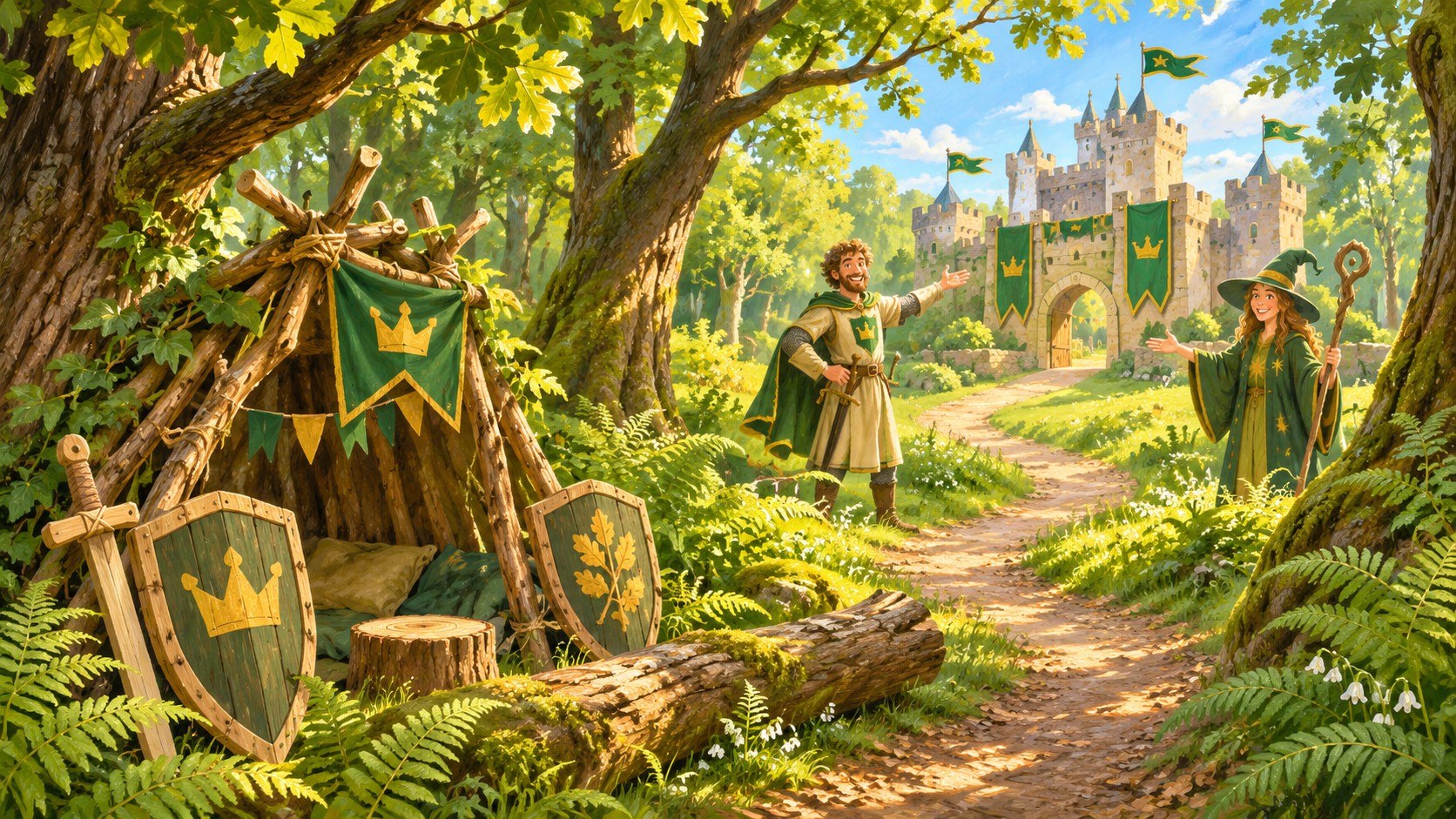
Outdoor play often works best when the activity is only a starting point. A short walk, a few ordinary objects and time to notice what is around you can become an adventure without a complicated plan.
Make a tiny trail
Take a length of string or ribbon and use it as a pretend route on the ground. A fallen leaf can be a landmark, a stone can be a meeting place and a stick can point the way. Invite children to tell you who uses the trail. When you finish, collect the string and anything you brought with you. Leave plants and habitats as you found them.
Listen before you look
Stand still for one minute and count different sounds: wind, footsteps, birds, distant traffic or rain on leaves. Ask which sound is nearest and which is furthest away. There is no need to identify every bird. The value is in slowing down, paying attention and comparing what each person noticed.
Build a story from shapes
Look for a branch shaped like a letter, a cloud that suggests a creature or a tree that could be a castle. Let each child choose one shape and add it to a shared story. A quiet child can point or draw rather than speak. Older children can write the opening line for the next visit.
Check the weather, choose clothing and footwear that suit the place, and follow the landowner’s rules. Keep close supervision around water, uneven ground and unfamiliar plants. A good woodland activity is one that children can adapt, repeat and remember in their own way.